
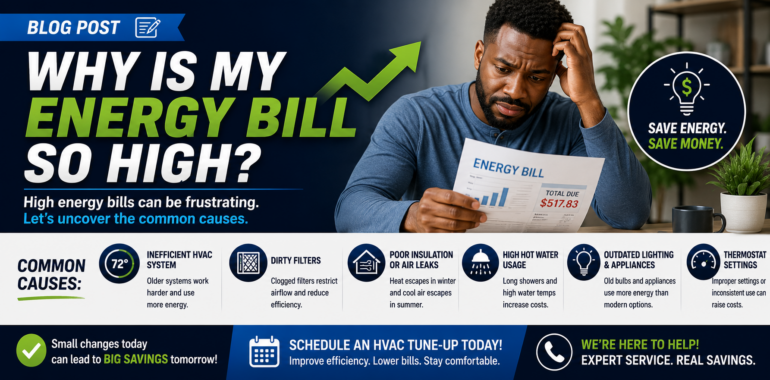
Why Is My Energy Bill So High?
Why Is My Energy Bill So High?
If you have noticed your energy bills increasing month after month, your HVAC system could be one of the biggest reasons why. Heating and cooling systems work hard throughout the year to keep your home comfortable, but when something is not operating efficiently, your utility costs can rise quickly.
At Starpoint Mechanical Air Conditioning and Heating, we help homeowners identify HVAC issues that may be driving up energy costs and provide dependable solutions to improve system efficiency. Below are some of the most common reasons your energy bill may be higher than normal.
Dirty Air Filters
One of the most common causes of high energy bills is a dirty air filter. When the filter becomes clogged with dust and debris, airflow becomes restricted, forcing your HVAC system to work harder to heat or cool your home.
A dirty air filter can lead to:
- Reduced airflow
- Longer system run times
- Increased energy usage
- Poor indoor air quality
- Additional strain on HVAC components
Replacing your air filter regularly is one of the easiest and most affordable ways to improve HVAC efficiency.
Aging HVAC Equipment
Older heating and cooling systems are often far less energy efficient than newer equipment. As HVAC systems age, components wear down and the system must work harder to maintain comfortable temperatures.
Signs your HVAC system may be outdated include:
- Frequent repairs
- Rising energy bills
- Uneven temperatures
- Excessive noise
- Poor cooling or heating performance
If your HVAC system is more than 10–15 years old, upgrading to a newer energy-efficient system may significantly reduce your utility costs.
Leaky Ductwork
Your ductwork carries heated and cooled air throughout your home. If ducts develop leaks, cracks, or loose connections, conditioned air can escape before it reaches your living spaces.
Leaky ducts can cause:
- Higher energy bills
- Uneven temperatures
- Poor airflow
- Reduced indoor comfort
Professional duct inspections can help identify airflow problems and improve overall HVAC efficiency.
Thermostat Problems
A malfunctioning thermostat can cause your HVAC system to run longer than necessary or cycle improperly. Incorrect thermostat settings may also lead to unnecessary energy usage.
Common thermostat issues include:
- Inaccurate temperature readings
- Constant HVAC cycling
- System not shutting off properly
- Poor temperature control
Upgrading to a programmable or smart thermostat may help improve comfort and reduce energy consumption.
Lack of HVAC Maintenance
Routine HVAC maintenance is essential for keeping your system operating efficiently. Without regular maintenance, dirt buildup and worn components can reduce system performance and increase energy costs.
Benefits of routine HVAC maintenance include:
- Improved energy efficiency
- Better airflow
- Reduced breakdowns
- Longer system lifespan
- Lower monthly utility bills
Seasonal HVAC tune-ups help identify small problems before they turn into costly repairs.
Refrigerant Leaks
Low refrigerant levels can force your air conditioning system to work much harder to cool your home. Refrigerant leaks not only reduce cooling performance but can also increase energy usage significantly.
Signs of a refrigerant leak may include:
- Warm air from vents
- Frozen evaporator coils
- Longer cooling cycles
- Hissing noises
- Increased utility bills
Refrigerant problems should always be inspected and repaired by a licensed HVAC technician.
Poor Insulation & Air Leaks
Your HVAC system may be operating properly, but poor insulation or air leaks around doors and windows can allow conditioned air to escape from your home.
Common sources of energy loss include:
- Drafty windows
- Poor attic insulation
- Gaps around doors
- Leaking ductwork
- Unsealed crawl spaces
Improving insulation and sealing air leaks can help reduce the workload on your HVAC system.
HVAC System Running Constantly
If your heating or cooling system seems to run nonstop, it could indicate an underlying problem.
Possible causes may include:
- Dirty air filters
- Incorrect thermostat settings
- Refrigerant issues
- Oversized or undersized HVAC equipment
- Dirty evaporator coils
- Failing HVAC components
A constantly running HVAC system uses more energy and may lead to premature equipment wear.
High Humidity Levels
Georgia’s humidity can make your HVAC system work harder to maintain indoor comfort. Excess humidity may cause your air conditioner to run longer cooling cycles, increasing energy usage.
Proper humidity control can help:
- Improve comfort
- Reduce cooling costs
- Improve indoor air quality
- Reduce strain on your HVAC system
Our HVAC technicians can evaluate your system and recommend solutions to improve indoor humidity levels.
How to Lower Your Energy Bills
There are several ways homeowners can improve HVAC efficiency and reduce monthly utility costs:
- Replace air filters regularly
- Schedule seasonal HVAC maintenance
- Upgrade older HVAC equipment
- Seal ductwork leaks
- Improve insulation
- Install a programmable thermostat
- Keep vents clear and unobstructed
- Clean around outdoor HVAC units
Even small improvements can make a noticeable difference in energy efficiency over time.
Schedule HVAC Service Today
If your energy bills have been unusually high, your HVAC system may be working harder than it should. Contact Starpoint Mechanical Air Conditioning and Heating today for professional HVAC inspections, repairs, and maintenance services.
Our experienced HVAC technicians proudly serve homeowners throughout Georgia and are committed to helping improve comfort, energy efficiency, and HVAC system performance.