
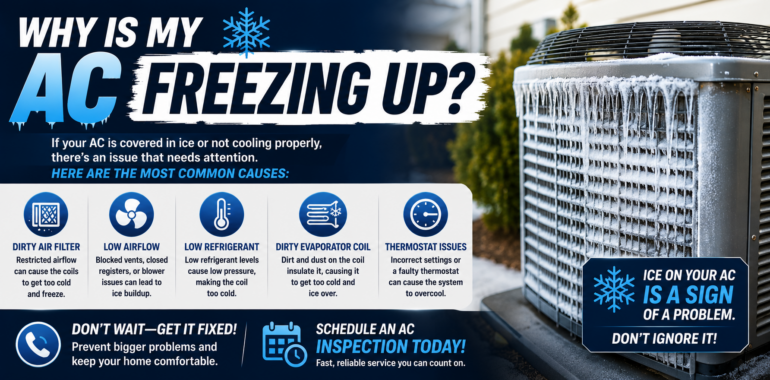
Why Is My AC Freezing Up?
Why Is My AC Freezing Up?
Seeing ice build up on your air conditioner during the middle of summer may seem strange, but it is actually a common HVAC problem. If your AC system is freezing up, it is usually a sign that something is preventing your system from operating properly. Ignoring the problem can lead to poor cooling performance, higher energy bills, and even serious damage to your HVAC system.
At Starpoint Mechanical Air Conditioning and Heating, we help homeowners and businesses diagnose and repair frozen air conditioning systems throughout Georgia. Below are some of the most common reasons your AC may be freezing up and what you should do if it happens.
What Does It Mean When Your AC Freezes Up?
When an air conditioner “freezes up,” ice typically forms on the evaporator coil, refrigerant lines, or outdoor unit. Your air conditioning system relies on proper airflow and refrigerant levels to absorb heat from inside your home. When something interrupts this process, condensation on the coils can freeze into ice.
A frozen AC system often cannot cool your home effectively and may eventually stop working altogether.
Dirty Air Filters
One of the most common causes of a frozen air conditioner is a dirty air filter. Restricted airflow prevents warm air from moving across the evaporator coil, causing the coil temperature to drop too low and freeze.
Signs of a dirty filter may include:
- Weak airflow from vents
- Uneven cooling
- Increased dust in the home
- Higher energy bills
Replacing your air filter regularly can help improve airflow and reduce strain on your HVAC system.
Low Refrigerant Levels
Low refrigerant is another common cause of frozen AC coils. Refrigerant helps absorb heat from inside your home, and when levels are too low due to a leak, the pressure inside the system drops. This can cause the evaporator coil to become excessively cold and freeze.
Common signs of low refrigerant include:
- Warm air from vents
- Ice buildup on refrigerant lines
- Hissing or bubbling noises
- Longer cooling cycles
Refrigerant leaks should always be repaired by a licensed HVAC technician.
Blocked or Closed Air Vents
Your HVAC system requires proper airflow throughout the home. Closing too many vents or blocking airflow with furniture, rugs, or curtains can reduce circulation and contribute to frozen coils.
To help maintain proper airflow:
- Keep vents open
- Avoid blocking return vents
- Keep furniture away from vents
- Replace dirty air filters regularly
Good airflow is essential for proper cooling performance.
Dirty Evaporator Coils
Over time, dirt and dust can build up on the evaporator coil, restricting airflow and reducing the system’s ability to absorb heat. Dirty coils can eventually freeze and cause your air conditioner to stop cooling properly.
Routine HVAC maintenance helps keep evaporator coils clean and operating efficiently.
Blower Motor Problems
The blower motor is responsible for circulating air through your HVAC system. If the blower motor is failing or operating improperly, airflow may become restricted, increasing the risk of frozen coils.
Signs of blower motor issues may include:
- Weak airflow
- Strange noises
- Uneven temperatures
- AC system freezing up repeatedly
A professional HVAC inspection can help identify airflow problems caused by blower motor issues.
Thermostat Problems
Faulty thermostat settings or malfunctioning thermostats can cause your air conditioning system to run longer than necessary, increasing the risk of frozen coils.
Make sure:
- Your thermostat is functioning properly
- The temperature is set correctly
- The fan setting is on “Auto”
If thermostat problems continue, professional HVAC service may be needed.
Drainage Problems
Your AC system removes moisture from the air as it cools your home. If the condensate drain line becomes clogged, moisture can build up around the evaporator coil and contribute to freezing issues.
Common signs of drainage problems include:
- Water leaks around the indoor unit
- Excess humidity
- Frozen coils
- Musty odors
Routine maintenance can help keep drain lines clean and functioning properly.
What Should You Do If Your AC Is Frozen?
If you notice ice buildup on your air conditioning system, it is important to act quickly to prevent further damage.
Here are a few steps you can take:
- Turn off the air conditioner
- Switch the fan to “On” to help thaw the ice
- Check and replace the air filter if needed
- Make sure vents are open and unobstructed
- Contact a professional HVAC technician
Running a frozen AC system can place excessive strain on the compressor and other HVAC components.
How Preventive Maintenance Helps Prevent Frozen AC Systems
Routine HVAC maintenance is one of the best ways to prevent frozen air conditioners and unexpected cooling problems.
Regular maintenance can help:
- Improve airflow
- Maintain proper refrigerant levels
- Keep coils clean
- Improve energy efficiency
- Reduce breakdowns
- Extend HVAC system lifespan
- Improve indoor comfort
Seasonal air conditioning tune-ups help identify small issues before they become expensive repair problems.
When to Call an HVAC Professional
While some airflow issues can be resolved with a filter replacement, recurring freezing problems usually indicate a larger HVAC issue that requires professional attention.
You should contact an HVAC technician if:
- Your AC keeps freezing up
- Your system is blowing warm air
- Ice repeatedly forms on refrigerant lines
- Airflow remains weak
- Your energy bills suddenly increase
- Your home is not cooling properly
Ignoring a frozen AC system can eventually lead to compressor failure and costly repairs.
Schedule AC Repair Service Today
If your air conditioner is freezing up or not cooling your home properly, contact Starpoint Mechanical Air Conditioning and Heating today.
Our experienced HVAC technicians provide fast and reliable AC repair services throughout Georgia and are committed to restoring comfort and cooling performance to your home or business.