
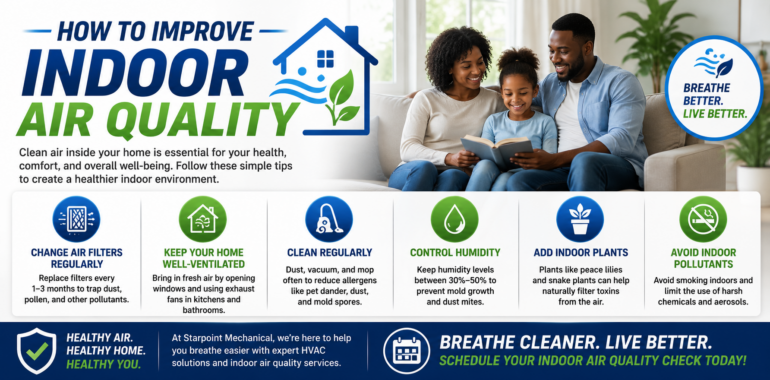
How to Improve Indoor Air Quality
The quality of the air inside your home plays a major role in your comfort, health, and overall well-being. Poor indoor air quality can contribute to allergies, respiratory issues, unpleasant odors, excessive dust, and even reduced HVAC system performance. Since many people spend most of their time indoors, maintaining clean and healthy air inside your home is more important than ever.
At Starpoint Mechanical Air Conditioning and Heating, we help homeowners improve indoor air quality with professional HVAC services, air filtration solutions, and preventative maintenance. Below are several effective ways to improve the air quality inside your home or business.
Change Your HVAC Air Filters Regularly
One of the simplest and most important ways to improve indoor air quality is by changing your HVAC air filters regularly. Dirty air filters can allow dust, pollen, pet dander, and other airborne contaminants to circulate throughout your home.
Benefits of replacing air filters include:
- Improved airflow
- Cleaner indoor air
- Reduced dust buildup
- Better HVAC efficiency
- Reduced strain on your system
Most air filters should be checked monthly and replaced every one to three months depending on usage, pets, and indoor air conditions.
Schedule Routine HVAC Maintenance
Routine HVAC maintenance helps keep your heating and cooling system operating efficiently while improving indoor air quality. During a maintenance visit, HVAC technicians can inspect and clean important system components that affect airflow and air cleanliness.
Preventative HVAC maintenance may help:
- Reduce airborne contaminants
- Improve ventilation
- Increase HVAC efficiency
- Prevent mold and mildew buildup
- Extend system lifespan
Regular maintenance can also help identify small HVAC issues before they become costly repair problems.
Keep Air Ducts Clean
Your ductwork distributes heated and cooled air throughout your home. Over time, dust, dirt, pet hair, and other debris can accumulate inside the ducts and affect air quality.
Dirty ductwork may contribute to:
- Increased dust in the home
- Allergy symptoms
- Poor airflow
- Unpleasant odors
Professional duct inspections and cleaning services may help improve airflow and reduce indoor air pollutants.
Control Indoor Humidity Levels
High humidity levels can make your home feel uncomfortable and encourage mold and mildew growth. Low humidity can also create dry indoor conditions that irritate the skin, throat, and respiratory system.
Maintaining balanced humidity levels can help:
- Improve comfort
- Reduce mold growth
- Protect indoor air quality
- Reduce allergens
Whole-home humidifiers and dehumidifiers can help regulate indoor moisture levels and improve overall comfort.
Improve Ventilation
Proper ventilation is essential for healthy indoor air quality. Without adequate airflow, indoor pollutants can become trapped inside the home.
Improving ventilation may include:
- Using exhaust fans
- Opening windows when weather permits
- Installing ventilation systems
- Improving airflow throughout the home
Ventilation helps remove stale air and replace it with cleaner outdoor air.
Consider Indoor Air Quality Products
Modern HVAC systems can be paired with indoor air quality products designed to help reduce airborne contaminants and improve overall air cleanliness.
Popular indoor air quality solutions include:
- Air purifiers
- UV air sanitizers
- High-efficiency air filters
- Whole-home humidifiers
- Whole-home dehumidifiers
- Ventilation systems
These systems may help reduce allergens, dust, bacteria, odors, and airborne particles inside your home.
Keep Your Home Clean
Regular cleaning can also help improve indoor air quality by reducing dust, pet dander, and other contaminants.
Helpful cleaning habits include:
- Vacuuming carpets and rugs regularly
- Dusting surfaces frequently
- Washing bedding and curtains
- Keeping pet areas clean
- Reducing clutter that collects dust
A cleaner home environment can help support healthier indoor air.
Watch for Signs of Poor Indoor Air Quality
Sometimes poor indoor air quality is not immediately obvious. There are several warning signs that may indicate indoor air problems.
Common signs include:
- Excessive dust buildup
- Allergy or asthma symptoms
- Musty odors
- Poor airflow
- High indoor humidity
- Frequent headaches or respiratory irritation
- Uneven temperatures throughout the home
If you notice ongoing indoor air issues, it may be time to have your HVAC system inspected.
Why Indoor Air Quality Matters
Poor indoor air quality can affect more than just comfort. Clean indoor air is important for overall health, especially for individuals with allergies, asthma, or respiratory conditions.
Improving indoor air quality may help:
- Reduce allergens
- Improve respiratory health
- Increase comfort
- Reduce odors
- Improve HVAC efficiency
- Create a cleaner living environment
Investing in indoor air quality solutions can help create a healthier and more comfortable home for your family.
Schedule Indoor Air Quality Services Today
If you are concerned about the air quality inside your home or business, contact Starpoint Mechanical Air Conditioning and Heating today.
Our experienced HVAC technicians provide professional indoor air quality solutions throughout Georgia and can help improve airflow, ventilation, filtration, and overall indoor comfort.