
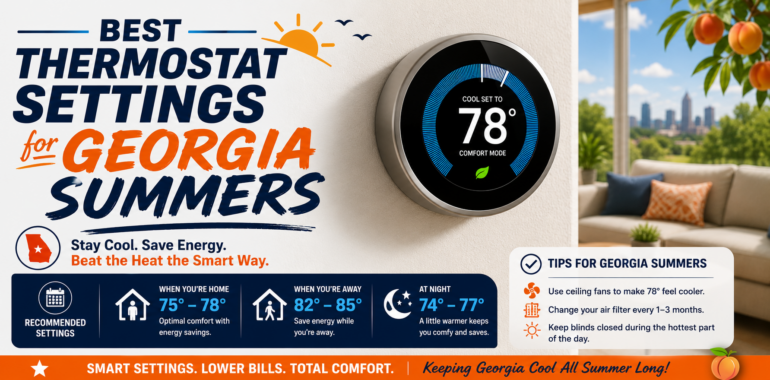
Best Thermostat Settings for Georgia Summers
Georgia summers are known for high temperatures, intense humidity, and long stretches of hot weather. During the peak of summer, your air conditioning system works hard to keep your home comfortable while also managing indoor humidity levels. One of the best ways to improve comfort, reduce energy costs, and help your HVAC system operate efficiently is by using the right thermostat settings.
At Starpoint Mechanical Air Conditioning and Heating, homeowners often ask us what thermostat temperature is best during Georgia’s hot summer months. The answer depends on comfort preferences, energy efficiency goals, and whether you are home during the day. Below are some helpful thermostat recommendations and energy-saving tips for Georgia summers.
Recommended Thermostat Settings for Summer
For most Georgia homes, the U.S. Department of Energy commonly recommends setting your thermostat to around:
- 78 degrees when you are home
- 85 degrees when you are away
- Slightly warmer while sleeping if comfortable
While every family’s comfort level is different, 78 degrees is often considered a good balance between indoor comfort and energy efficiency during hot weather.
Why 78 Degrees Is Often Recommended
During Georgia summers, outdoor temperatures can easily climb into the 90s with high humidity. Setting your thermostat extremely low forces your HVAC system to work harder and run longer, increasing wear and tear on important components.
Keeping your thermostat around 78 degrees can help:
- Reduce energy consumption
- Lower monthly utility bills
- Improve HVAC efficiency
- Reduce strain on your AC system
- Help prevent unexpected breakdowns
Even adjusting your thermostat a few degrees higher can make a noticeable difference in cooling costs over time.
Best Thermostat Settings When You Are Away
If nobody is home during the day, raising the thermostat can help reduce unnecessary cooling costs without allowing the home to become excessively hot.
Recommended settings while away include:
- 82 to 85 degrees during work hours
- Returning to 78 degrees before arriving home
Programmable and smart thermostats make this process much easier by automatically adjusting temperatures based on your schedule.
Smart Thermostats Can Improve Efficiency
Smart thermostats are becoming increasingly popular because they help homeowners manage indoor comfort while improving energy efficiency.
Benefits of smart thermostats include:
- Automatic temperature scheduling
- Remote control from your smartphone
- Energy usage tracking
- Improved comfort control
- Reduced cooling costs
- Better HVAC system management
Smart thermostats can learn your daily habits and automatically adjust temperatures to help reduce energy waste during Georgia’s hottest months.
Avoid Setting Your Thermostat Too Low
Many homeowners believe setting the thermostat extremely low will cool the home faster. However, most air conditioning systems cool at the same rate regardless of how low the thermostat is set.
Setting the thermostat too low can lead to:
- Higher energy bills
- Increased HVAC wear and tear
- Frozen evaporator coils
- Excessive system runtime
- Increased risk of breakdowns
Instead of drastically lowering the thermostat, it is better to maintain a consistent and reasonable cooling temperature.
Humidity Control Matters in Georgia
Georgia summers bring not only high temperatures but also heavy humidity. Excess humidity inside the home can make indoor temperatures feel warmer than they actually are.
Your HVAC system helps remove moisture from the air while cooling your home. However, poor HVAC performance or oversized systems may struggle to control humidity effectively.
Signs of indoor humidity problems may include:
- Sticky or damp indoor air
- Musty odors
- Condensation on windows
- Uneven cooling
- Increased allergy symptoms
Proper HVAC maintenance and thermostat settings can help improve humidity control and indoor comfort.
Ceiling Fans Can Help Reduce Cooling Costs
Using ceiling fans alongside your air conditioning system can help rooms feel cooler without lowering the thermostat temperature.
Ceiling fans help by:
- Improving airflow
- Circulating cool air
- Helping rooms feel several degrees cooler
- Reducing strain on the HVAC system
This may allow you to increase your thermostat setting slightly while still remaining comfortable.
HVAC Maintenance Helps Improve Cooling Efficiency
Your thermostat settings work best when your HVAC system is operating efficiently. Routine HVAC maintenance can improve cooling performance and help reduce energy usage during the summer.
Benefits of regular HVAC maintenance include:
- Improved airflow
- Better cooling performance
- Lower energy bills
- Reduced breakdowns
- Longer system lifespan
- Improved indoor air quality
Seasonal AC tune-ups help ensure your system is ready to handle Georgia’s extreme summer heat.
Signs Your HVAC System May Not Be Cooling Efficiently
If your home still feels uncomfortable even with recommended thermostat settings, your HVAC system may need service.
Common signs of cooling problems include:
- Warm air from vents
- Weak airflow
- Uneven temperatures
- Rising utility bills
- Constant AC runtime
- Excess humidity indoors
Professional HVAC inspections can help identify issues before they become major repairs.
Stay Comfortable All Summer Long
Finding the right thermostat setting can help improve indoor comfort, reduce cooling costs, and protect your HVAC system during Georgia’s hot summer months.
If your air conditioning system is struggling to keep your home comfortable, contact Starpoint Mechanical Air Conditioning and Heating today.
Our experienced HVAC technicians proudly provide professional AC repair, HVAC maintenance, and cooling system services throughout Georgia to help homeowners stay comfortable all summer long.