
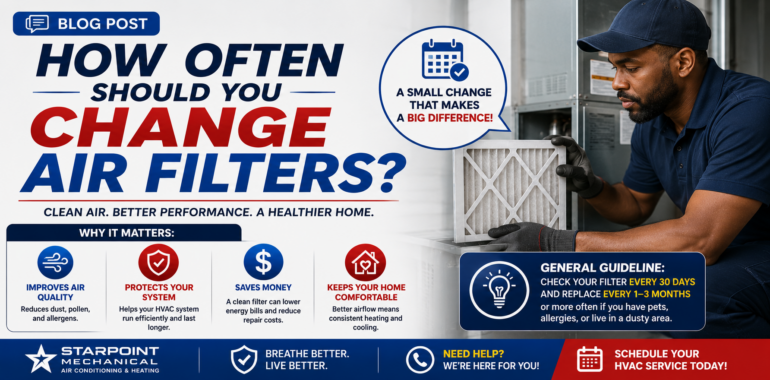
How Often Should You Change Air Filters?
Your HVAC system works hard year-round to keep your home comfortable, especially during the hot Georgia summers and chilly winter months. One of the simplest and most important ways to help your heating and cooling system operate efficiently is by regularly changing your air filters.
Many homeowners forget about their HVAC air filters until they notice reduced airflow, rising energy bills, or poor indoor air quality. However, replacing your air filters on a regular schedule can help improve system performance, extend equipment lifespan, and create a cleaner indoor environment.
At Starpoint Mechanical Air Conditioning and Heating, we often get asked, “How often should I change my air filter?” The answer depends on several factors, including the type of filter, the size of your home, and your indoor environment.
General Air Filter Replacement Guidelines
While every home is different, most HVAC air filters should generally be replaced every:
- 30 to 60 days for standard 1-inch filters
- 60 to 90 days for higher-quality pleated filters
- Every 20 to 45 days, if you have pets
- Every 20 to 30 days, if someone in the home has allergies or asthma
- Every 6 to 12 months for some thicker media filters
Checking your air filter monthly is one of the best ways to determine whether it needs replacement sooner.
Why Air Filters Matter
Your HVAC air filter helps trap dust, dirt, pet dander, pollen, and other airborne particles before they circulate throughout your home. A clean air filter allows your HVAC system to maintain proper airflow and operate more efficiently.
A dirty or clogged air filter can lead to:
- Reduced airflow
- Poor indoor air quality
- Increased energy bills
- Uneven temperatures
- Frozen evaporator coils
- Excessive strain on HVAC equipment
- Reduced heating and cooling performance
- More frequent HVAC repairs
Changing your air filter regularly is one of the easiest and most affordable ways to help protect your HVAC system.
Factors That Affect How Often You Should Change Air Filters
Several factors can impact how quickly your HVAC air filter becomes dirty.
Pets in the Home
Homes with dogs or cats typically require more frequent filter changes due to pet hair and dander circulating through the HVAC system.
Allergies or Respiratory Issues
If someone in your household suffers from allergies, asthma, or other respiratory conditions, replacing filters more frequently can help improve indoor air quality.
System Usage
During peak summer and winter months, your HVAC system may run more often, causing filters to collect dirt and debris faster.
Indoor Air Quality
Homes with higher levels of dust, construction activity, smoke, or outdoor pollutants may require more frequent filter replacements.
Type of Air Filter
Higher-quality filters may last longer than basic fiberglass filters, but they still require routine inspection and replacement.
Signs Your Air Filter Needs To Be Changed
Sometimes your HVAC system will show signs that the air filter is becoming clogged.
Common signs include:
- Weak airflow from vents
- Dust buildup around vents
- Increased allergy symptoms
- Higher energy bills
- HVAC system running longer than normal
- Uneven cooling or heating
- Dirty or gray-looking filter
- Excessive dust inside the home
If you notice any of these issues, it may be time to inspect and replace your HVAC filter.
Can a Dirty Air Filter Damage Your HVAC System?
Yes. A clogged air filter can place unnecessary strain on your HVAC system and eventually lead to more serious problems.
Restricted airflow can cause:
- Frozen evaporator coils
- Overheating furnaces
- Increased wear on blower motors
- Reduced energy efficiency
- Shortened equipment lifespan
- Costly HVAC repairs
Routine air filter replacement is an important part of preventative HVAC maintenance.
Choosing the Right Air Filter
There are many different types of HVAC air filters available, and choosing the right one depends on your system and indoor air quality needs.
Common filter types include:
- Fiberglass filters
- Pleated filters
- HEPA filters
- Washable filters
- Electrostatic filters
- Media filters
Some filters are designed to improve airflow, while others focus more heavily on trapping allergens and smaller airborne particles.
If you are unsure which filter is best for your HVAC system, a professional HVAC technician can help recommend the right option.
Benefits of Regular Air Filter Changes
Replacing your air filters regularly offers several important benefits for both your HVAC system and your indoor comfort.
Benefits include:
- Improved airflow
- Better energy efficiency
- Lower utility bills
- Improved indoor air quality
- Reduced HVAC repairs
- Longer system lifespan
- Better heating and cooling performance
- A cleaner indoor environment
Small maintenance steps like changing your filter can make a big difference in the overall performance of your HVAC system.
Preventative HVAC Maintenance Matters
In addition to replacing air filters, routine HVAC maintenance can help identify small issues before they turn into major repair problems.
Professional HVAC maintenance can help:
- Improve system efficiency
- Extend equipment lifespan
- Reduce breakdowns
- Improve indoor comfort
- Maintain consistent airflow
- Keep your heating and cooling system operating properly year-round
Regular maintenance is one of the best ways to protect your HVAC investment.
Schedule HVAC Maintenance Today
If your HVAC system is struggling with airflow problems, poor performance, or rising energy bills, contact Starpoint Mechanical Air Conditioning and Heating today.
Our experienced HVAC technicians proudly provide professional heating and cooling services throughout Georgia and can help keep your system operating efficiently year-round.