
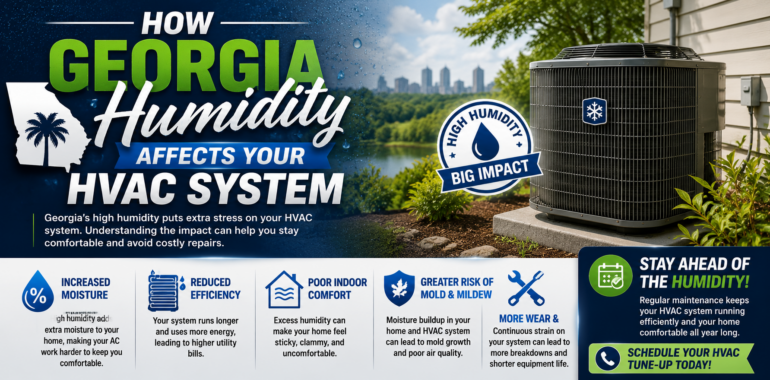
How Georgia Humidity Affects Your HVAC System
Living in Georgia means dealing with hot temperatures and high humidity levels for much of the year. While most homeowners expect their air conditioning system to keep their home cool, many people do not realize how much humidity can impact HVAC performance, indoor comfort, and energy efficiency.
High humidity places additional strain on your heating and cooling system and can lead to several HVAC problems if not properly managed. At Starpoint Mechanical Air Conditioning and Heating, we help homeowners and businesses throughout Georgia keep their HVAC systems operating efficiently despite the challenges caused by Southern humidity.
Below, we explain how Georgia humidity affects your HVAC system and what you can do to protect your home and improve indoor comfort.
Why Humidity Matters
Humidity refers to the amount of moisture in the air. In Georgia, humidity levels can become extremely high during the spring and summer months, making the outdoor air feel hotter and heavier.
Your HVAC system does more than simply cool the air. It also helps remove excess moisture from inside your home. When humidity levels rise, your air conditioner has to work harder to maintain comfortable indoor temperatures.
High indoor humidity can make your home feel:
- Sticky or muggy
- Warmer than the thermostat setting
- Damp or uncomfortable
- More difficult to cool
Even when your air conditioner is running, excessive humidity can reduce overall comfort.
Increased Strain on Your Air Conditioning System
When humidity levels are high, your HVAC system must work longer and harder to remove moisture from the air while also cooling your home.
This extra workload can lead to:
- Increased energy usage
- Higher utility bills
- Longer cooling cycles
- More wear and tear on HVAC components
- Reduced system lifespan
Over time, excessive strain can increase the likelihood of breakdowns and expensive repairs.
Poor Indoor Comfort
Humidity can make your indoor environment feel uncomfortable even if the temperature inside your home appears normal.
For example, your thermostat may read 72 degrees, but high humidity can make it feel much warmer. This often causes homeowners to lower the thermostat further, forcing the HVAC system to work even harder.
When humidity levels are properly controlled, your home typically feels cooler and more comfortable without needing to overwork the air conditioner.
Higher Energy Bills
One of the most noticeable effects of high humidity is increased energy costs. Since your air conditioner must run longer to cool and dehumidify the air, it consumes more electricity.
Common signs humidity may be affecting HVAC efficiency include:
- AC system running constantly
- Higher monthly energy bills
- Uneven cooling throughout the home
- Difficulty reaching the thermostat setting
An HVAC system that struggles with humidity control may not be operating as efficiently as it should.
Increased Risk of Mold & Mildew
Excess indoor moisture can create ideal conditions for mold and mildew growth inside your home and HVAC system.
High humidity can contribute to:
- Mold growth around vents
- Musty odors
- Condensation on windows
- Damp indoor surfaces
- Reduced indoor air quality
Poor humidity control can also impact allergy sufferers and individuals with respiratory sensitivities.
Proper ventilation and HVAC maintenance are important for helping reduce excess moisture and improve indoor air quality.
Frozen Evaporator Coils
High humidity combined with airflow restrictions can sometimes contribute to frozen evaporator coils. When airflow becomes restricted due to dirty filters or blocked vents, moisture may freeze on the coils and reduce cooling performance.
Signs of frozen coils may include:
- Warm air from vents
- Reduced airflow
- Ice buildup on HVAC components
- AC system struggling to cool
If your system develops frozen coils, it is important to contact a professional HVAC technician.
Humidity Can Affect Your Thermostat
High indoor humidity can make your home feel hotter than it actually is, causing your thermostat and HVAC system to cycle more frequently.
This constant operation can place unnecessary strain on your HVAC equipment and increase operating costs.
Modern smart thermostats and humidity control systems can help improve indoor comfort while reducing unnecessary HVAC strain.
How to Reduce Indoor Humidity
There are several ways homeowners can help reduce indoor humidity and improve HVAC performance.
Replace Air Filters Regularly
Dirty air filters can restrict airflow and reduce your HVAC system’s ability to remove humidity effectively.
Schedule Routine HVAC Maintenance
Preventative maintenance helps keep your system operating efficiently and allows technicians to identify airflow or moisture-related problems early.
Keep Vents Open & Unblocked
Blocked vents can reduce airflow and make humidity control more difficult.
Consider a Whole-Home Dehumidifier
In some homes, adding a dehumidifier can help reduce excess indoor moisture and improve comfort.
Upgrade Older HVAC Systems
Older HVAC systems may struggle to handle Georgia’s humidity levels efficiently. Newer high-efficiency systems often provide better humidity control.
Benefits of Proper Humidity Control
Managing indoor humidity levels can help improve both comfort and HVAC performance.
Benefits include:
- Improved indoor comfort
- Lower energy bills
- Better indoor air quality
- Reduced mold and mildew risks
- Longer HVAC system lifespan
- Improved cooling efficiency
- Reduced strain on HVAC equipment
A properly functioning HVAC system should help control both temperature and humidity throughout your home.
Why Professional HVAC Maintenance Matters
Routine HVAC maintenance is one of the best ways to help your system perform efficiently during Georgia’s humid seasons.
Professional HVAC maintenance can help:
- Improve airflow
- Increase cooling efficiency
- Identify refrigerant issues
- Reduce system strain
- Prevent breakdowns
- Improve humidity control
Regular tune-ups can help ensure your HVAC system is prepared to handle the demands of Georgia weather.
Schedule HVAC Service Today
If your home feels humid, uncomfortable, or your air conditioning system is struggling to keep up during the Georgia heat, contact Starpoint Mechanical Air Conditioning and Heating today.
Our experienced HVAC technicians proudly provide professional heating and cooling services throughout Georgia and can help improve your home’s comfort, efficiency, and indoor air quality year-round.