
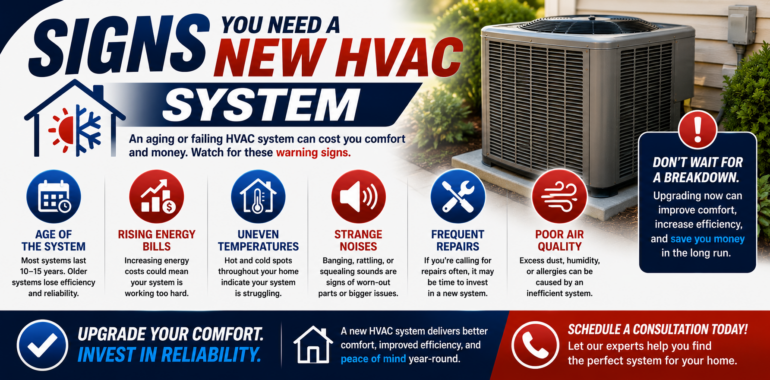
Signs You Need a New HVAC System
Signs You Need a New HVAC System
Your HVAC system plays a major role in keeping your home comfortable throughout the year. From cooling your home during hot Georgia summers to keeping your family warm during colder weather, your heating and cooling system works hard every season. However, like any mechanical system, HVAC equipment does not last forever.
Over time, wear and tear can reduce performance, increase energy costs, and lead to more frequent breakdowns. Knowing the warning signs of a failing HVAC system can help you avoid unexpected repairs and determine when it may be time for a replacement.
At Starpoint Mechanical Air Conditioning and Heating, we help homeowners and businesses throughout Georgia determine when HVAC repair makes sense and when replacing the system may be the better long-term solution.
Your HVAC System Is More Than 10–15 Years Old
One of the biggest indicators that it may be time for a new HVAC system is the age of your equipment. Most heating and cooling systems are designed to last around 10 to 15 years with proper maintenance.
As systems age, they often become less efficient and more prone to mechanical problems. Older HVAC systems may also struggle to maintain consistent indoor temperatures, especially during extreme weather conditions.
If your system is approaching or exceeding this age range, replacing it with a newer energy-efficient model may help improve comfort and reduce utility costs.
Your Energy Bills Keep Increasing
A sudden or gradual increase in your energy bills may indicate your HVAC system is no longer operating efficiently. As heating and cooling systems age, they often have to work harder to maintain the same level of comfort.
Higher energy costs may be caused by:
- Worn-out HVAC components
- Reduced airflow
- Failing motors
- Refrigerant issues
- Aging equipment
- Dirty coils or filters
If your energy bills continue rising despite regular maintenance, upgrading to a more energy-efficient HVAC system may help lower monthly operating costs.
Frequent HVAC Repairs
Occasional HVAC repairs are normal over time, but if you are constantly scheduling service calls, your system may be nearing the end of its lifespan.
Frequent repair issues can quickly become expensive, especially when major components begin failing.
Common recurring HVAC problems may include:
- Refrigerant leaks
- Compressor failures
- Blower motor problems
- Thermostat issues
- Electrical failures
- Uneven heating or cooling
If repair costs continue adding up, investing in a new HVAC system may provide greater reliability and long-term savings.
Uneven Temperatures Throughout Your Home
Are some rooms too hot while others stay too cold? Uneven temperatures throughout your home may indicate your HVAC system is struggling to distribute air properly.
This problem may be caused by:
- Aging HVAC equipment
- Poor airflow
- Failing ductwork
- An undersized system
- Reduced system performance
A newer HVAC system designed specifically for your home’s size and layout can often provide more consistent indoor comfort.
Your HVAC System Runs Constantly
If your heating or cooling system seems to run nonstop without properly heating or cooling your home, it may be losing efficiency.
Constant operation can place additional strain on the system, leading to:
- Higher energy bills
- Increased wear and tear
- Reduced equipment lifespan
- Poor indoor comfort
An aging HVAC system may no longer have the capacity to efficiently maintain indoor temperatures, especially during extreme summer or winter conditions.
Strange Noises or Odors
Unusual noises or smells coming from your HVAC system may indicate serious internal problems.
Common warning signs include:
- Banging noises
- Grinding sounds
- Squealing motors
- Burning smells
- Musty odors
- Rattling components
While some issues can be repaired, repeated mechanical problems may indicate the system is wearing out and nearing replacement time.
Poor Indoor Air Quality
Older HVAC systems may struggle to maintain proper indoor air quality, airflow, and humidity control.
Signs of poor indoor air quality may include:
- Excessive dust buildup
- Increased allergy symptoms
- Poor airflow
- High humidity levels
- Stale indoor air
Modern HVAC systems often include improved filtration, ventilation, and humidity control features that help create a cleaner and more comfortable indoor environment.
Your HVAC System Uses R-22 Refrigerant
If your air conditioning system still uses R-22 refrigerant (commonly known as Freon), it may be time to consider replacing the unit.
R-22 refrigerant has been phased out, making repairs involving refrigerant leaks increasingly expensive and difficult. Replacing an older system with a modern energy-efficient unit can help improve performance while avoiding costly refrigerant issues.
Benefits of Installing a New HVAC System
Replacing an outdated HVAC system can provide several long-term benefits, including:
- Improved energy efficiency
- Lower utility bills
- Better indoor comfort
- More consistent temperatures
- Improved indoor air quality
- Quieter operation
- Reduced repair costs
- Increased system reliability
Modern HVAC systems are designed to operate more efficiently while providing improved comfort and performance.
When Should You Replace Instead of Repair?
In many cases, replacing your HVAC system may make more financial sense than continuing to repair aging equipment.
You may want to consider replacement if:
- Your system is over 10–15 years old
- Repair costs are becoming frequent or expensive
- Your energy bills continue rising
- Your system struggles to maintain comfort
- Major HVAC components have failed
A professional HVAC inspection can help determine whether repair or replacement is the best option for your situation.
Schedule an HVAC Inspection Today
If your heating or cooling system is showing signs of aging or reduced performance, contact Starpoint Mechanical Air Conditioning and Heating today.
Our experienced HVAC technicians provide professional HVAC inspections, repairs, and replacement services throughout Georgia. We are committed to helping homeowners and businesses find reliable, energy-efficient heating and cooling solutions that keep indoor spaces comfortable year-round.