
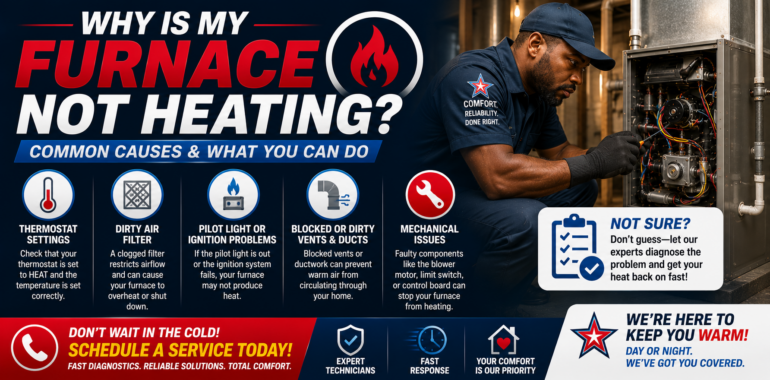
Why Is My Furnace Not Heating?
Why Is My Furnace Not Heating?
When temperatures drop, a properly working furnace becomes essential for keeping your home warm and comfortable. If your furnace suddenly stops heating or begins blowing cool air, it can quickly create frustration and discomfort for your family or business.
At Starpoint Mechanical Air Conditioning and Heating, we help homeowners and businesses diagnose and repair heating problems quickly and efficiently. There are several reasons why your furnace may not be heating properly, and some issues are more serious than others.
Below are some of the most common causes of furnace heating problems and when it may be time to call a professional HVAC technician.
Thermostat Problems
One of the most common reasons a furnace stops heating is a thermostat issue. Before assuming there is a major HVAC problem, check your thermostat settings.
Make sure:
- The thermostat is set to “Heat”
- The temperature is set higher than the current room temperature
- The batteries are not dead
- The thermostat display is functioning properly
A faulty or incorrectly programmed thermostat can prevent your heating system from operating correctly.
Dirty Air Filters
A clogged air filter can restrict airflow and make it difficult for your furnace to circulate warm air throughout your home.
Signs of a dirty air filter may include:
- Weak airflow from vents
- Uneven heating
- Furnace overheating
- Higher energy bills
- Increased dust buildup
Replacing your air filter regularly can help improve furnace efficiency and reduce strain on the system.
Pilot Light or Ignition Problems
Older gas furnaces often use pilot lights, while newer systems typically use electronic ignition systems. If the ignition system fails, your furnace may not produce heat.
Common ignition-related issues include:
- Pilot light going out
- Dirty flame sensors
- Faulty ignition switches
- Gas supply problems
If you smell gas or suspect a gas-related issue, leave the area immediately and contact a professional HVAC technician.
Tripped Circuit Breaker
Sometimes a furnace may stop working because of an electrical issue or tripped breaker. If your heating system will not turn on, check your electrical panel to see if the furnace breaker has tripped.
Frequent breaker trips may indicate:
- Electrical component failures
- Wiring issues
- Overloaded circuits
- Blower motor problems
Electrical HVAC issues should always be inspected by a qualified technician.
Blower Motor Problems
The blower motor is responsible for circulating warm air throughout your home. If the blower motor fails, your furnace may produce heat but not properly distribute it through the ductwork.
Signs of blower motor problems may include:
- Weak airflow
- Strange noises
- Furnace constantly running
- Uneven heating
Professional diagnosis is often needed to determine if the blower motor requires repair or replacement.
Dirty Flame Sensor
Gas furnaces rely on a flame sensor to detect whether the burners are operating properly. If the flame sensor becomes dirty, the furnace may shut down as a safety precaution.
A dirty flame sensor can cause:
- Short cycling
- Furnace not staying on
- No heat production
Routine furnace maintenance can help prevent flame sensor issues.
Clogged or Blocked Vents
Blocked air vents or ductwork restrictions can prevent warm air from circulating properly throughout your home.
Common causes include:
- Closed vents
- Furniture blocking airflow
- Dirty ductwork
- Airflow obstructions
Keeping vents open and unobstructed helps maintain proper airflow and heating performance.
Furnace Is Overheating
If your furnace overheats, safety controls may automatically shut the system down to prevent damage. Overheating problems are often caused by restricted airflow or dirty components.
Common overheating causes include:
- Dirty air filters
- Blower motor issues
- Blocked vents
- Dirty internal components
Ignoring overheating problems can lead to larger and more expensive repairs over time.
Aging Furnace Equipment
Older furnaces naturally become less efficient and more prone to breakdowns over time. If your furnace frequently requires repairs or struggles to heat your home evenly, it may be nearing the end of its lifespan.
Signs your furnace may need replacement include:
- Frequent repairs
- Rising energy bills
- Uneven heating
- Strange noises
- Poor efficiency
An HVAC professional can help determine whether repair or replacement is the better option.
When to Call an HVAC Professional
While some furnace issues may have simple solutions, ongoing heating problems should always be inspected by a professional technician.
You should contact an HVAC professional if:
- Your furnace will not turn on
- Your system is blowing cold air
- You smell burning odors or gas
- Your furnace makes loud noises
- Your energy bills suddenly increase
- Your home is not heating evenly
Prompt furnace repairs can help prevent additional damage and restore comfort more quickly.
How Preventive Furnace Maintenance Helps
Routine furnace maintenance is one of the best ways to prevent unexpected heating problems during colder weather.
Regular maintenance can help:
- Improve heating efficiency
- Reduce breakdowns
- Extend furnace lifespan
- Improve indoor air quality
- Lower energy bills
- Identify problems early
Seasonal heating tune-ups can help keep your furnace operating safely and efficiently all winter long.
Schedule Furnace Repair Service Today
If your furnace is not heating properly or your heating system has stopped working, contact Starpoint Mechanical Air Conditioning and Heating today.
Our experienced HVAC technicians provide fast and reliable furnace repair services throughout Georgia and are committed to restoring warmth and comfort to your home or business as quickly as possible.